Blog Posts

Blog Posts

Anthropic Rejects Pentagon’s New Terms, Stands Firm on Lethal Autonomous Weapons and Mass Surveillance

Less than 24 hours before the deadline in an ultimatum issued by the Pentagon, Anthropic has refused the Department of Defense’s demands for unrestricted access to its AI. It’s the culmination of a dramatic exchange of public statements, social media posts, and behind-the-scenes negotiations, coming down to Defense Secretary Pete Hegseth’s desire to renegotiate all […]


Clint Eastwood’s Unexpected Role in a Timeless 1950s Science Fiction Movie

are among those you must see even if you aren’t fond of the genre), such as “A Fistful of Dollars” or “The Good, the Bad, and the Ugly,” were quite distant from making their appearance on the silver screen.

However, nearly a decade prior to that, Eastwood was already taking steps as an actor. He began his acting journey in 1955, landing tiny and uncredited parts, the first being in the sequel to “Creature from the Black Lagoon,” titled “Revenge of the Creature.”

He must have left an impression on its director, Jack Arnold, as Arnold cast him again within the same year, in his sci-fi creature-feature, “Tarantula.” At the age of 25, Eastwood portrayed a jet squadron leader — completely unrecognizable because of the pilot helmet and mask he was required to wear — spearheading the aerial assault against the kaiju monster causing chaos in Arizona.

Tarantula is a largely esteemed monster film

Reasons to Turn Off Microsoft’s New Intrusive Feature Right Away

**You Need to Disable This Unwelcome New Microsoft Feature Immediately – Here’s Why**

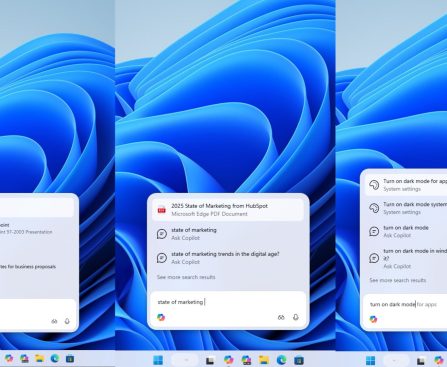
A recently identified feature in Microsoft Copilot allows the AI chatbot to collect data regarding your usage of various Microsoft applications. Windows Latest was the first to announce the finding of the toggle, which is enabled by default. According to the settings page, it enables “Copilot to utilize information from Bing, MSN, Edge, and other Microsoft products you’ve interacted with” when activated.

This effectively means that your cookies and browsing data from Microsoft Edge, as well as your search history in Bing, can be utilized to shape Copilot’s responses. This is merely another instance of Microsoft integrating its AI capabilities into its other programs. It was somewhat anticipated as the company sought to remain competitive with others like Perplexity and Google, particularly since Microsoft began promoting Edge as an AI browser due to its Copilot integration.

While this toggle may appear beneficial, there is no clear indication of precisely what data Copilot may be extracting from your other Microsoft services. Thus, it might be prudent to disable this feature to prevent any inadvertent sharing of personal information and private data with the AI chatbot.

**Enhancing Copilot’s memory**

This capability seems to be part of Microsoft’s efforts to enhance Copilot’s memory, making the AI chatbot more efficient for users. That’s a logical aim, but the fact that this feature has been activated by default without any notification from Microsoft is concerning. Moreover, the absence of a detailed outline of what type of data is being accessed or which Microsoft products it is sourced from is also a bit alarming.

Many Windows users do not utilize Copilot regularly, and some have even searched for methods to completely remove it – users were delighted last year when a Windows 11 bug uninstalled Copilot for some. Nevertheless, Microsoft persists in promoting its AI features, enabling many by default. When Microsoft imposes these features on users — especially those that involve accessing potentially sensitive information — it only intensifies the growing negative perception surrounding AI.

There is also the worry that this feature might one day extract data from your Windows installation. This could include anything from information on personal files to specifics about your system’s hardware — all of which could potentially be exploited by malicious actors. We already understand that some AI can install malware on Windows PCs, and it’s also concerning that even if you don’t use Copilot, your data might still be collected by it.

**How to prevent Copilot from monitoring you**

To disable the new memory usage functionality, you will need to visit the Copilot website in your browser. From there, sign into your Microsoft account by clicking the profile icon at the screen’s bottom left. Once logged in, navigate to the Memory section in the Settings menu.

The toggle you need to locate is called **Microsoft usage data**. Ensure the toggle is switched off, preventing Copilot from collecting data. You can also erase any data that Copilot has previously collected about you by selecting **Delete all memory** at the bottom of this Settings page. Remember that if you do use Copilot, deleting that memory could hinder the chatbot’s effectiveness in performing tasks related to your data.

visionOS 26.3.1 Launched with Resolution for Apple TV Application Problems

**Apple Unveils visionOS 26.3.1 for Vision Pro Users**

Apple has revealed the launch of visionOS 26.3.1 for Apple Vision Pro users, targeting a particular issue that has impacted the viewing experience within the Apple TV app. As per the release notes, the update mainly rectifies a flickering issue that may arise when users view sports via the MultiView feature.

This update is released just a fortnight after the last version, visionOS 26.3, and is especially well-timed with the start of the Major League Soccer (MLS) season. This implies that Apple may have reacted to user input concerning the flickering problem during MLS games, which can undermine the viewing experience.

The official release notes from Apple indicate: “The update resolves a flicker issue that can happen when viewing sports with MultiView in the Apple TV app.” This improvement intends to enhance both the overall performance and enjoyment of the app, particularly for sports enthusiasts who take advantage of the MultiView feature to view several games at once.

Alongside the visionOS update, there are indications that Apple is also developing an update for iPhone users, specifically iOS 26.3.1. Nevertheless, this update has yet to be made available, leaving iPhone users hoping for enhancements akin to those offered to Vision Pro users.

As Apple persistently enhances its software products, updates such as visionOS 26.3.1 demonstrate the company’s dedication to improving user experience and tackling issues that emerge in real-time usage contexts. For Apple Vision Pro users, this update is a welcomed enhancement that boosts the functionality of the Apple TV app, particularly during critical sports seasons.

Netflix Pulls Back Acquisition Offer for HBO and Warner Bros. Discovery

Netflix has formally retracted its offer to purchase Warner Bros. Discovery (WBD), a move that signifies a major change in the competitive environment of the entertainment sector. Initially, Netflix made waves in December with a stunning $83 billion proposal, exceeding Paramount’s offer. However, recent changes prompted a reassessment of the agreement.

Even though WBD recognized Netflix as the top bidder, Netflix encountered increasing pressure from Paramount Skydance, which persistently delivered updated proposals. Ultimately, WBD’s Board of Directors concluded that Paramount’s most recent offer was classified as a “Superior Proposal” in accordance with the current merger agreement with Netflix.

In a statement from co-CEOs Ted Sarandos and Greg Peters, Netflix conveyed its choice not to enhance its offer, stating that while the deal could be advantageous, it had lost its financial appeal at the cost necessary to equal Paramount’s bid. The leadership pointed out that acquiring Warner Bros. Discovery was seen as a “nice to have” if the price was right, rather than a vital acquisition at any expense.

This choice alters the narrative from a technology-oriented entertainment firm possibly taking over a conventional film and television studio to a situation where two established studios are effectively coming together. The consequences of this change could transform the future of content creation and distribution within the sector.

In a related event, Netflix and Apple have revealed a content exchange involving Formula 1. The forthcoming season of “Drive to Survive” will be accessible on Apple TV in the United States, while the next F1 Canadian Grand Prix will be broadcasted on both platforms. This collaboration underscores the changing dynamics of content partnerships in the streaming arena.

As the entertainment industry keeps progressing, Netflix’s withdrawal from the WBD acquisition highlights the complexities and financial factors that major entities must navigate in a competitive landscape.

Apple Requests Court to Dismiss Proposed Class Action Over Allegations of Fraud Related to Siri AI

### Apple Faces Legal Action Over Alleged Misleading Claims Related to AI Capabilities and Legal Compliance

The technology behemoth Apple is presently facing a lawsuit that accuses it of deceiving investors concerning the timeline and readiness of its artificial intelligence (AI) capabilities, particularly its Siri voice assistant. The legal action also addresses the company’s management of the Epic Games situation, raising considerable alarm among shareholders.

#### Claims of Deception

As per reports, the lawsuit is a proposed class action asserting that Apple misled its shareholders by exaggerating Siri’s capabilities and misrepresenting its adherence to a court order linked to app sales commissions. The claims indicate that Apple’s assertions about its AI progress were excessively optimistic and did not accurately depict the genuine state of development.

In a recent submission, Apple has attempted to dismiss the lawsuit, contending that there is no substantiation for assertions that the company intentionally misled investors regarding the timeline for integrating advanced AI features into Siri. The submission highlights a June 2024 conference where Apple discussed its AI efforts but asserts that the company was not aware of any potential delays that could impact iPhone 16 sales.

#### Association with Epic Games Case

The lawsuit also alludes to the ongoing litigation with Epic Games, which has had considerable ramifications for Apple’s App Store operations. The second fraud allegation in the lawsuit relates to a stock drop that came after a ruling by Judge Yvonne Gonzalez Rogers, which determined that Apple had breached an injunction necessitating modifications to its App Store commission framework. Apple’s defense argues that the company did not ensure that its compliance protocols would be flawless.

#### Representation of Shareholders

The plaintiffs in this matter are spearheaded by South Korea’s National Pension Service, recognized as the world’s third-largest pension fund, managing nearly $1 trillion in assets. This participation highlights the gravity of the accusations and the potential effects on Apple’s reputation and financial health.

#### Apple’s Legal Strategy

In its defense, Apple’s legal counsel has asserted that while the company’s stock has undergone fluctuations, it would be unreasonable to conclude that these changes amount to securities fraud. The defense underscores that the difficulties encountered by Apple’s stock do not equate to deliberate misconduct or misrepresentation.

As the case progresses, it will be essential to track the developments and possible ramifications for Apple and its investors. The result could establish important precedents regarding corporate transparency and responsibility within the tech sector.

For additional information, you can access the complete report by Reuters [here](https://www.reuters.com/sustainability/boards-policy-regulation/apple-seeks-dismissal-fraud-lawsuit-over-siri-ai-epic-injunction-2026-02-26/).